The Why
Only 35% of high school graduates earn a bachelor's degree. We're closing the gap.
The Problem
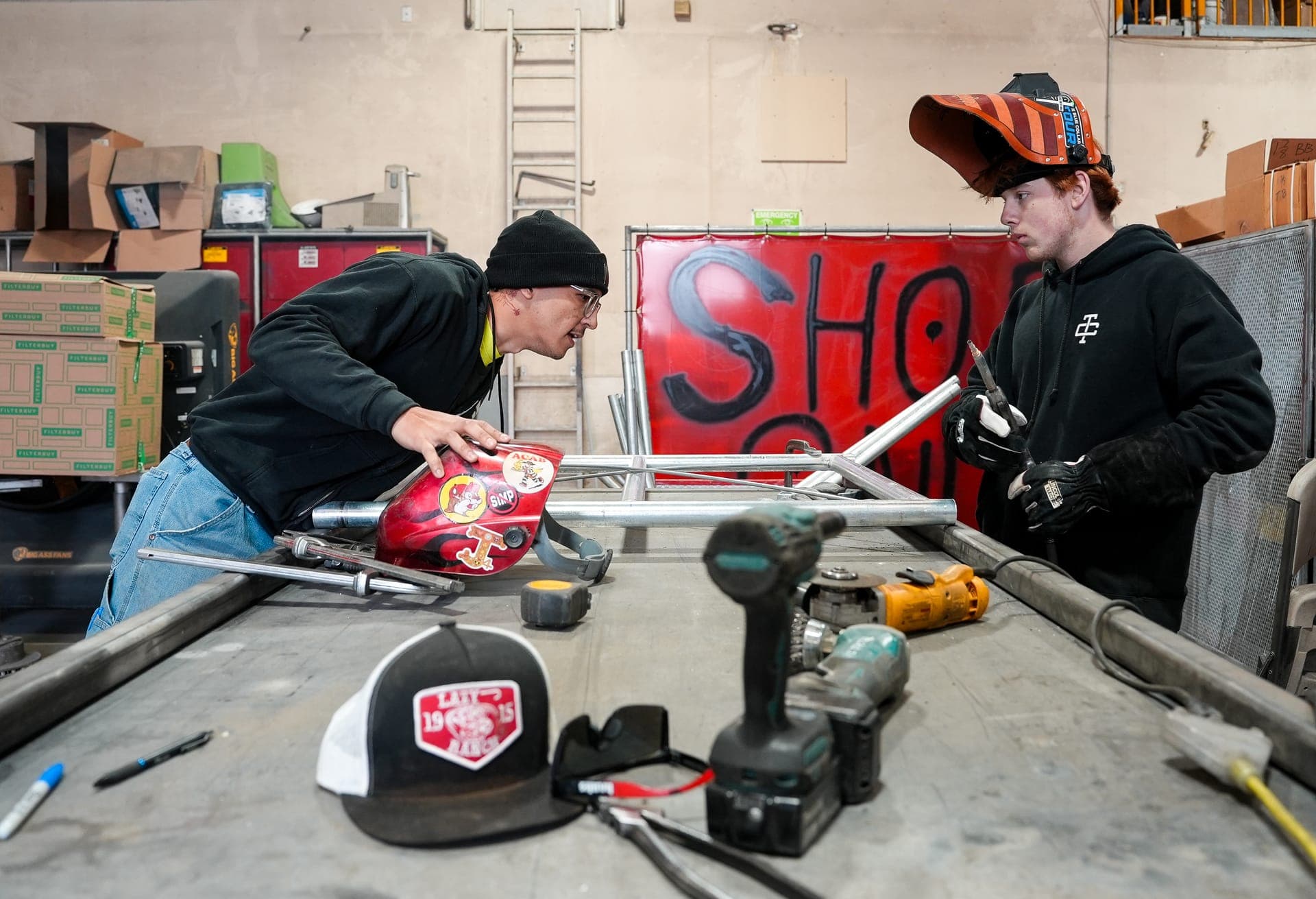
Paid internships should not only be for college students
of high school graduates go on to earn a bachelor's degree.
That means 65% of high school graduates will never follow the traditional college path — and are locked out of the paid internship opportunities that have historically been college-only.
The Opportunity
These students are ready. They just need the chance.
A paid internship turns potential into a career path — for every student, not just the college-bound.
Paid vs. Unpaid Internships
The Catch
This is the most critical distinction in the modern workforce. The effectiveness of an internship drops drastically if it is unpaid.
Full-Time Job Offers
- Paid Internships
- ~60–65% receive an offer
- Unpaid Internships
- ~35–40% receive an offer
- No Internship
- ~35–37% receive an offer
Starting Salary
- Paid Internships
- Significantly higher
- Unpaid Internships
- On par with no internship
- No Internship
- Baseline
| Metric | Paid Internships | Unpaid Internships | No Internship |
|---|---|---|---|
| Full-Time Job Offers | ~60–65% receive an offer | ~35–40% receive an offer | ~35–37% receive an offer |
| Starting Salary | Significantly higher | On par with no internship | Baseline |
The California Pipeline
From 100 Freshmen to ~35 Graduates
Track a theoretical cohort of 100 California high school freshmen through the education system. The pipeline filters down at every stage — leaving most students without the four-year degree that has traditionally been the gateway to a paid internship.
Sources: California Department of Education (2025/2026), Public Policy Institute of California (April 2026).
Methodology
Sources & Further Reading
Methodology
Sources & Further Reading
National Association of Colleges and Employers (NACE)
- 2026 Internship & Co-op Report — intern-to-full-time conversion rate hit a five-year high at 63.1%; student acceptance rate of 88.3%.
- 2026 Retention Metrics Data — over 75% of intern hires retained after one year vs. under 50% for hires with no internship.
- Historical Student Surveys (Classes of 2015–2024) — paid interns receive offers at over 60% vs. unpaid interns at ~35–37%.
- 2025 Recruiting Benchmarks Report — traditional sourcing takes ~27 days from interview to offer plus ~9 days for acceptance.
Public Policy Institute of California (PPIC)
- College Completion in California (April 2026) — 4-year and 6-year completion breakdowns across UC, CSU, and private institutions.
- How Does College Completion in California Compare to Other States? (February 2026) — historical bachelor's attainment rates.
California Department of Education
- 2025/2026 Dashboard and Graduation Release — state-level high school cohort graduation rate of 87.5% and A-G completion metrics.
Society for Human Resource Management (SHRM)
- 2025/2026 Benchmarking Reports — national baseline Cost-Per-Hire of $5,475 for non-executive roles; $6,200–$12,000+ for technical roles.
OECD & Education and Employers Taskforce
- Longitudinal studies — students with 4+ structured employer encounters in school were 86% less likely to be NEET and earned up to 16% more in their mid-20s.
Harvard Business Review & Human Capital Institute
- Internship Premium studies (Journal of Vocational Behavior, HBR) — relevant internships yield a 14–20% callback and offer-rate advantage.
- Standard external hires take 3–6 months to reach full productivity vs. interns who hit peak productivity on day one.
Our History
How CCCA Works! Came Together
Before John Pellman joined forces with Kevin Dobson, Founder and Executive Director of Capital College & Career Academy, he was working on his doctorate at the UC Davis CANDEL program. His dissertation, Why Am I Here? Making Career Education a Focal Point in Secondary Education, looked at how to make school more engaging by embedding high-quality career education into secondary school. Since opening CCCA in 2023, it has built one of the most innovative and comprehensive career education programs anywhere in public education. It is not based on pathways — it is based on exploration and building social capital.
CCCA Works! came together to support the mission of Capital College & Career Academy of providing paid internships within its high school program. From the moment Dr. Pellman, Founder and CEO of CCCA Works!, joined with Kevin Dobson, the development of this nonprofit organization became a goal. Since the school was founded in 2023, Dr. Pellman in collaboration with Kevin and the CCCA board members have worked tirelessly to come up with a program, establish nonprofit status, and secure a workers’ compensation policy. All of these pieces came together in early 2026.
Since January 2026, CCCA Works! has been placing high school student interns in the field. We are continually looking for more partners who understand the need and the benefits of bringing on interns.
As we always say, we cannot do this work without you.
John Pellman
Founder & CEO · May 2026